I get the budget question on nearly every first call, and I understand why. You searched for a price and the internet handed you a range: a brand video costs five thousand dollars, or it costs a hundred and fifty thousand, and your number is somewhere in there. The range is honest and almost useless, which is a frustrating thing to be holding when you have a budget meeting on Thursday.
I direct and produce brand films. Recent work includes a customer story for HR Path, a campaign film for NFL Canada, and a television spot for Solem, plus social films for Nespresso and IWC Schaffhausen that were cut and delivered while each event was still live. Every one of them started with the same two questions: a, what does this film have to make someone feel, and b, where does it need to live. The number arrives after those, because it cannot arrive before them.
The number is downstream of one question
When a brief for a brand film lands, the first thing I read is not the shot list. It is what the film has to make someone feel, and where it needs to live. Everything on the budget follows from that.
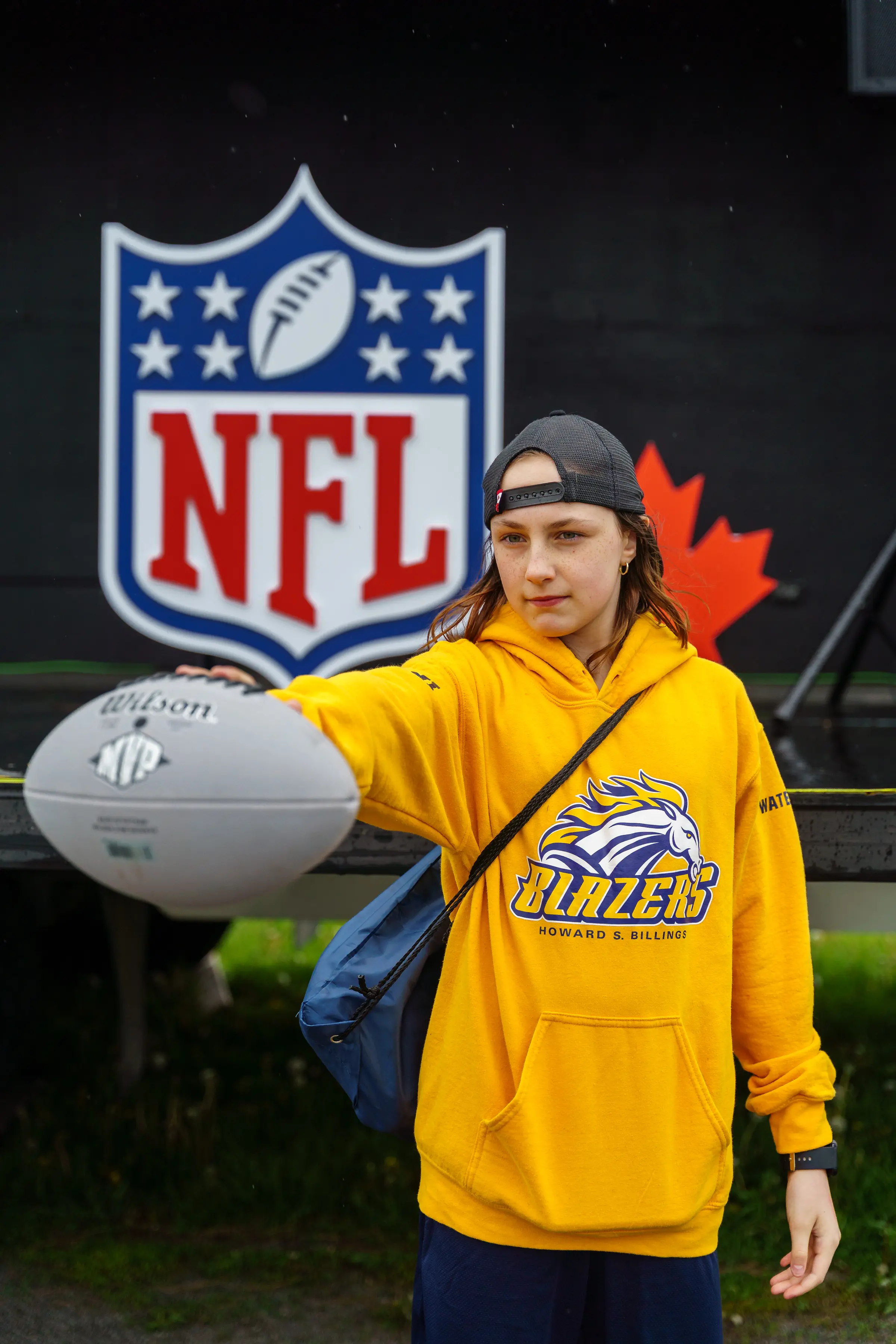
NFL Canada sent me a brief for a cheque presentation in Châteauguay. The ask was event documentation. Cover the handover, prove the funding arrived, deliver a clean record of the day. I read it and saw a campaign film.
It rained hard that afternoon, and the safe move would have been to shoot tight and treat the weather as a problem to hide. I made the rain the story instead: a community that shows up regardless, and a program that lands where it is needed regardless of conditions. I directed an interview with the woman who submitted her school, then built the sequence around the gap between what the day looked like and what it actually meant.
Same field, same afternoon, same people, and two completely different films with two completely different budgets. The cost followed that one choice about what the film was for, and it had nothing to do with the shot count.
Four kinds of brand video
Most of what people call a brand video is one of four things. Naming which one you need does more for your budget than any quote comparison.
The social film. A vertical cut made to post while the moment is still live. I shot one for Nespresso at a half marathon and delivered it the same weekend the race ran. This is the entry point. The market puts short social pieces in the low thousands, and most of the cost sits in how fast you need it finished.
The customer story. One narrative built around a client's result, the film a prospect watches before they decide. I directed one for HR Path. The interview carries it, texture from the workplace gives it weight, and a short cut pulls the result forward for social. In this city a polished two to three minute brand film runs roughly $6,000 to $18,000, depending on crew and ambition.
The campaign film. A directed piece with a concept, built to run across paid and brand channels for a season. The NFL film was one. So was my work with Solem, a run of campaigns that gave a microfibre brand an emotional language it did not have before. Campaign films start in the low five figures and climb with shoot days, cast, and locations.
The television spot. Broadcast standard, where every frame is scrutinised and the licensing is where most of the money goes. I directed Solem's television commercial. Work at this level is quoted, never listed, because no two are alike.

What moves the price
Once you know which of the four you are making, a handful of decisions set the cost, and the reality is the camera is almost never one of them.
Where it will live. Usage is the line most people forget. A film licensed for a year of paid media costs more than the same footage used once internally. You are buying reach and time, not footage.
Days and crew. Every shoot day multiplies planning, people, and edit hours. One directed day with a small senior crew delivers more than three loose days with a big team. I would rather bring fewer people who each own their craft.
Turnaround. Speed is a line item, honestly. When Nespresso needed a film while the race was still running, I planned the edit before the shoot rather than after it. Same day delivery is a decision made in the plan, and it shapes the cost of everything around it.
Language. In Montreal a brand film is often two films. I have run campaigns in French and English, and versioned one brand video into six regional cuts with a French edition. Every added language adds edit and review time. It belongs in the budget from the first conversation.
Why the cheap quote costs more
The quote everyone compares is the shoot. The value everyone misses is what happens after the day.
A film built as documentation has a short life: it proves the event happened, runs for a week, and goes in a folder. A film built with direction keeps working, because every frame was made to live somewhere specific, so it carries a campaign, feeds social, opens a page, and still lands a year later.
That is the real arithmetic, and it is the part the quote comparison cannot show you. A cheap film is not cheap if you are replacing it in three months, and a directed one costs more on the day and less across the year it keeps earning. The bang for your buck is in that second year, where no quote can show it to you. Beautiful, polished, made with restraint, and built to be used.
So what does it cost
It costs what the outcome is worth, scoped by someone who can tell which of the four films you are actually asking for. That is the number I quote, and I can only quote it once I understand what you are trying to make people feel. If you have a film in mind, tell me about it.
FAQ
How much does a brand video cost?
The honest market answer is wide. A short social film sits in the low thousands. A polished two to three minute brand film in this city runs roughly $6,000 to $18,000. A broadcast spot or a multi day campaign climbs from there. The spread is that large because the word video covers four different products, and the useful question is which one you actually need.
What makes one brand video cost more than another?
Rarely the camera. The drivers that move a quote most are usage, shoot days, crew size, turnaround, and language. A film licensed for a year of paid media costs more than the same footage used once internally, because you are buying reach and time. Speed and extra language versions each add to the edit. Creative ambition sets the ceiling.
Why do you not publish a price list?
Because a price list prices the wrong thing. Two films with the same run time can differ by a factor of ten, depending on what they carry and where they run. Quoting before I understand the outcome would overcharge you for something simple or underbuild something that matters. I scope to the film you actually need, which is the job you are hiring for.
Do you produce video in French and English?
Yes. I work between Montreal and London and deliver in both languages as a matter of course. I have run bilingual campaigns and versioned a single brand film into several regional cuts with a French edition. In this market, language is a production decision that belongs in the plan from the start, not a translation added at the end.
How fast can a brand video be delivered?
As fast as the plan allows, when the speed is designed in from the start. I have cut a social film the same weekend a race ran, because the edit was planned before the first frame. Rush delivery is a choice made in the planning, not a favour asked after the shoot. Tell me the deadline early and I build the production around it.