I have shot boutique openings and ambassador evenings for IWC Schaffhausen, TAG Heuer, Montblanc, and Michael Kors, plus campaign work for Maison Valmont and Nespresso. The thing I keep running into is that a maison will brief the night the way anyone briefs a night, and then quietly never use the gallery, and nobody in the room can articulate why.
The reality is that a maison is not asking for the room as it looked. It is asking for images that could sit inside an archive it has been building for a century, which is a different assignment from the one the brief describes, and it starts long before the camera comes out.
The maison does not need documentation
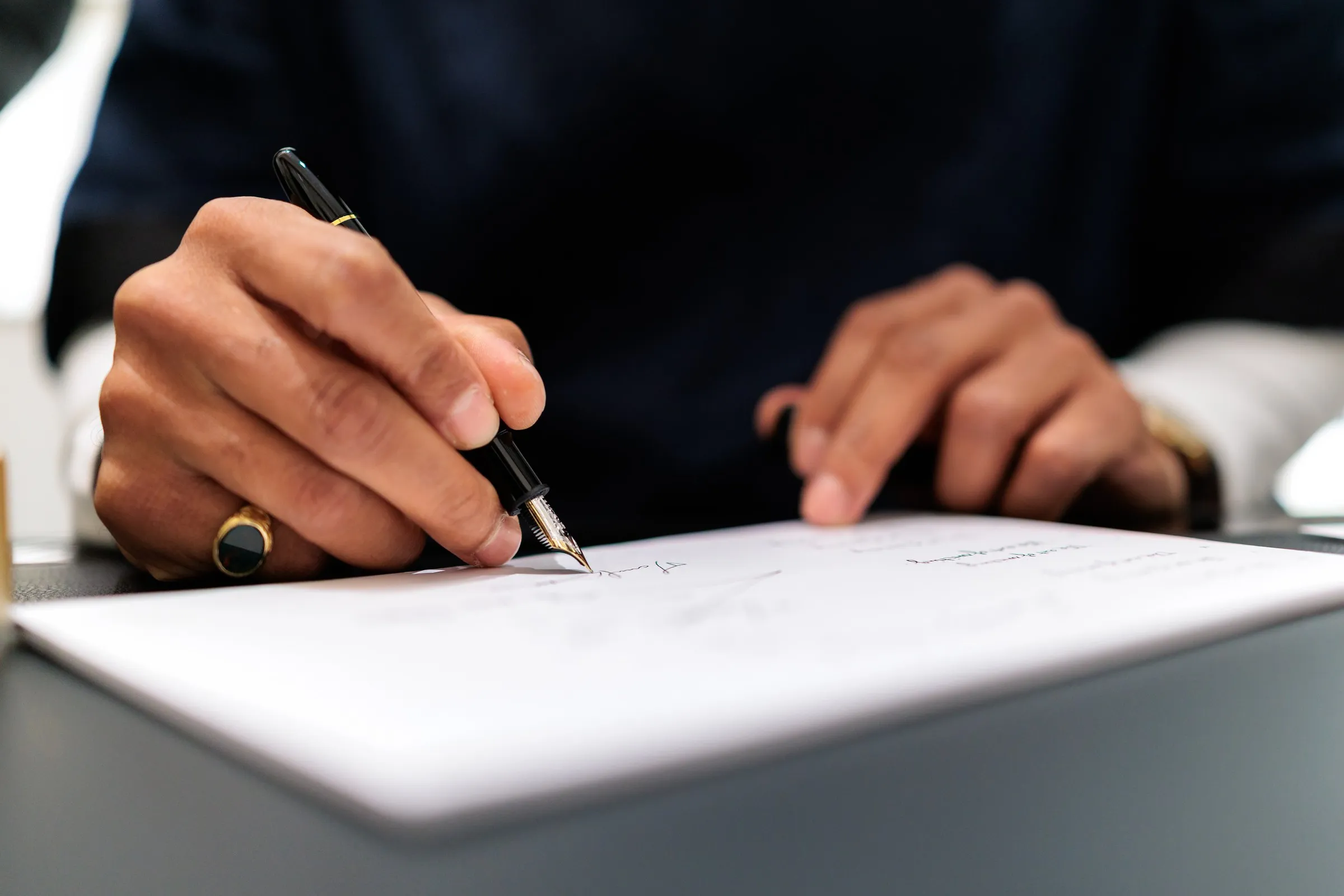
When Montblanc opened their Montréal boutique, the brief sat in a familiar genre: shoot the opening night, document the room, deliver a recap gallery. The risk on luxury openings is that the imagery reads as coverage. Cocktails, speeches, proof that the night happened. A maison with two centuries of restraint in its archive does not need proof. It needs images that could sit inside that archive. That reframe decides everything downstream: what you shoot, how you frame it, and what you leave out.
Composition is where the difference shows
On this kind of night I am doing two things at once: reading the light in the room, and hunting for the details that carry the maison. The stitching on a strap, the case under boutique light, the way a guest turns a watch on their wrist to catch it at an angle. I am waiting for the moments when someone actually interacts with the product rather than poses near it, and those moments are brief and they do not repeat.
I also change position and change lenses constantly. A set that lives at one focal length reads flat. Variety in focal length is what gives a gallery its editorial rhythm.
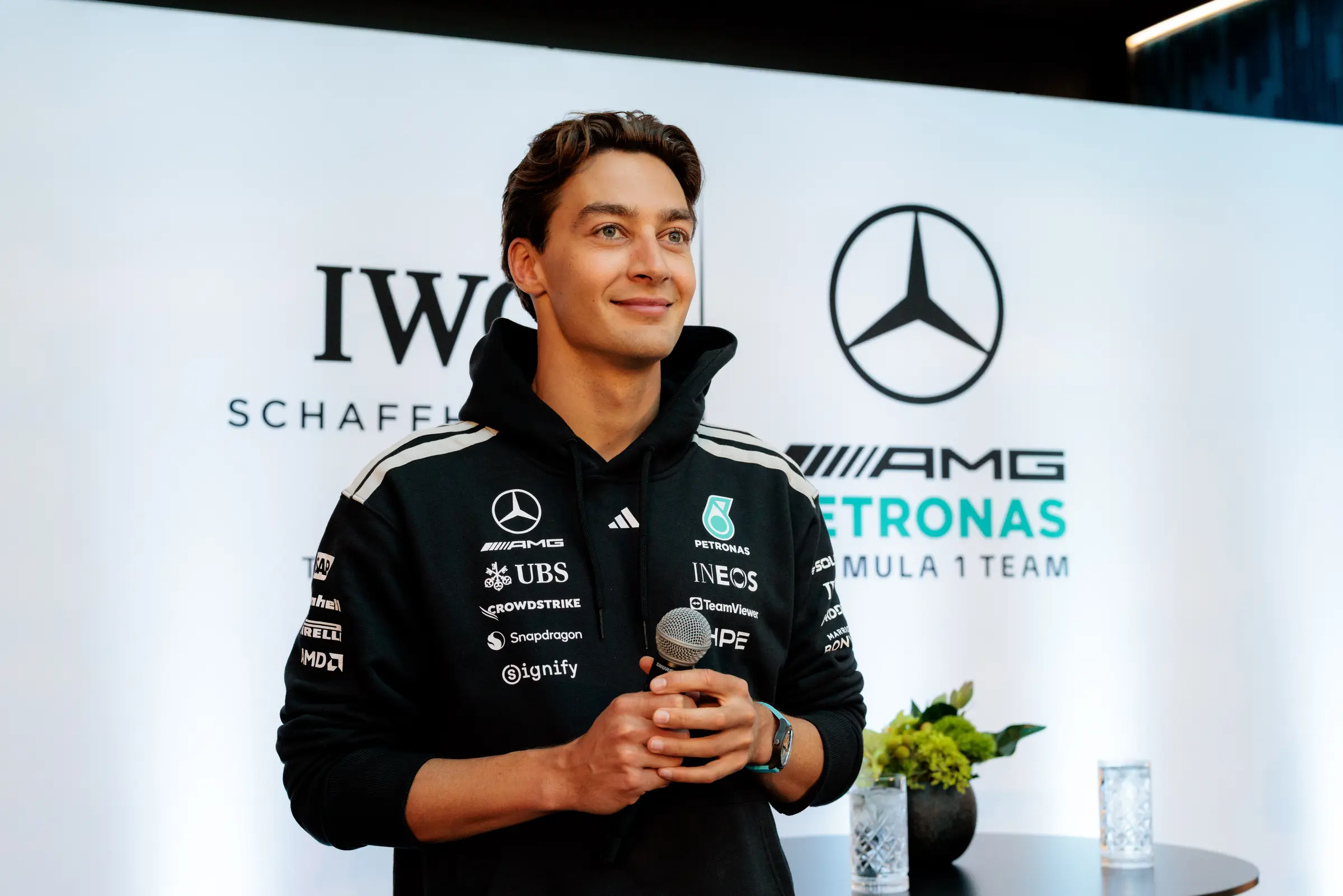
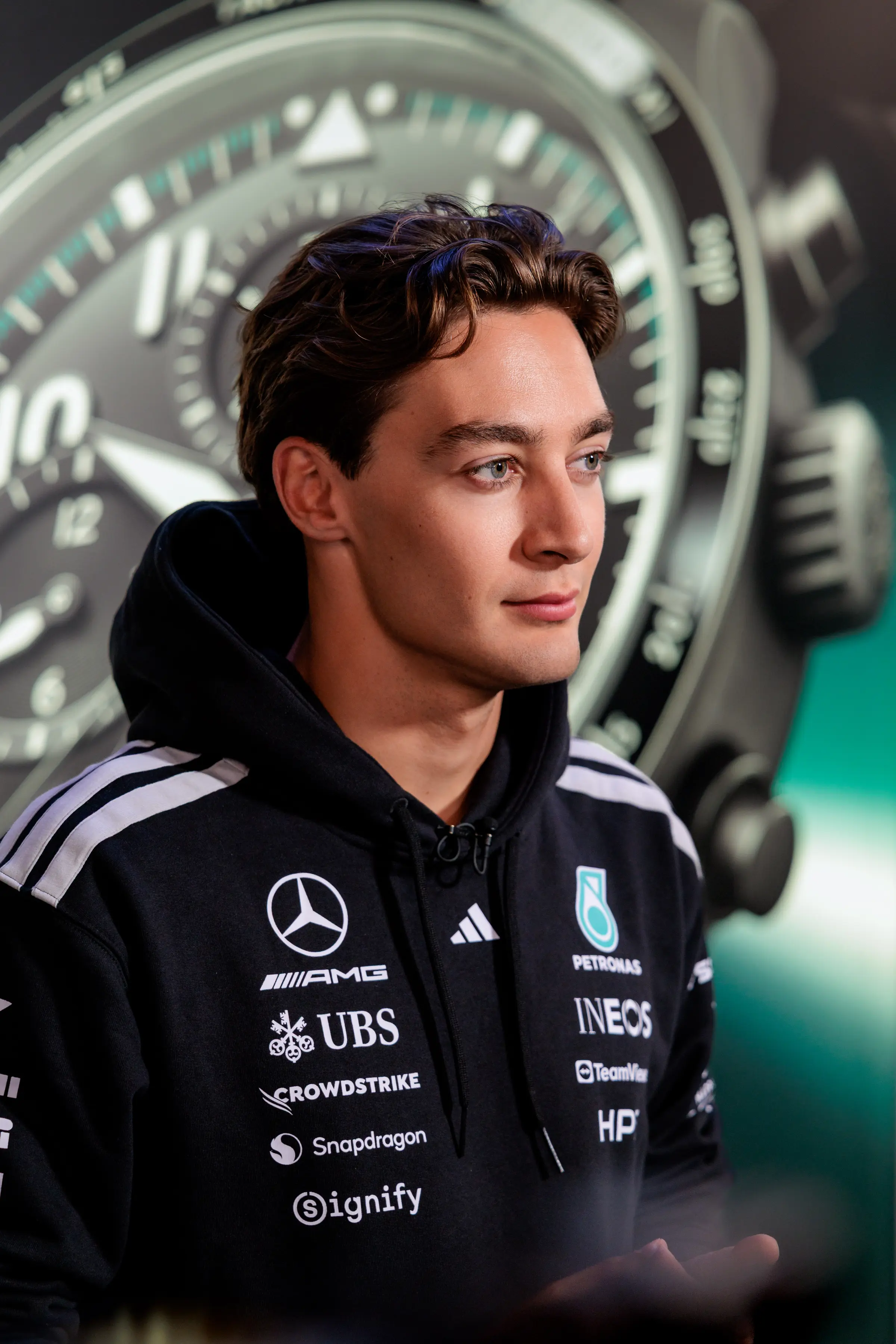
At IWC's George Russell evening during Grand Prix week, I shot the night two ways, and I say it out loud on a night like that because it keeps the set honest. The watches as objects: racing chronographs on their stands, pieces on wrists, cases in boutique light. And the driver as an editorial subject: portraits between moments, conversations with guests, the show car as his backdrop rather than a prop. Miss either half and the gallery only tells you the maison was in a room.
Preparation starts in the brand book
Every client gets research and a maison gets a deeper pass, honestly a much deeper one. I read the brand book closely for its elements and its voice, then I go through how the brand runs its own channels: a, what their campaigns keep returning to, and b, what they never show, which tells you more than the brand book does. I also watch how much air they leave in a frame. The goal is content that looks like a natural extension of what the brand already publishes, not a guest contribution.
TAG Heuer asked for their show car, the race suit, and the patch bar shot clean, as objects. I shot those the way the maison shoots its watches, then followed the story into the room.
Delivery is tact, speed, and finish
Luxury clients require tact, discretion, and efficiency on set. Nobody wants a photographer performing for the room. They also pay for a premium finish on a fast clock. The expectation is editorial imagery, retouched to a campaign standard, often within a day or two. For the Michael Kors and Elle Québec boutique editorial, I delivered more than 60 edited images within 24 hours of the boutique closing. The set had to carry the magazine feature and both brands' own channels at once.
One story, told for years
The reference I keep coming back to is Jacquemus, a brand that built itself through storytelling, where every image reads as an episode of one continuing story whether it is a campaign, a runway show, or a casual frame shot on a phone. That is the bar I hold luxury content to. A single gallery was never the product: the product is a visual argument the brand can keep making, frame after frame, season after season.
Which is why the direction is doing more work than the camera on a night like this. The room is beautiful and the light is good and none of that is the hard part. The hard part is knowing which twelve frames extend the brand's story, out of the two hundred that prove the night happened.
Where I work
I am based between Montréal and London, and I shoot for luxury brands in both. Boutique openings and ambassador evenings sit with my activations and events practice. Campaign and editorial commissions run through brand campaigns and editorial and hospitality. If you have a launch, an opening, or a campaign that needs this kind of work, tell me about it.
FAQ
What is luxury brand photography?
It is commercial photography held to the visual standard of the brand's own archive. That covers boutique openings, ambassador appearances, product campaigns, and editorial commissions. The imagery has to work inside the brand's existing visual language, not alongside it. The craft shows in composition, light, and restraint rather than in volume.
How is it different from event photography?
Event photography documents what happened, and for many brands that is exactly the right buy. Luxury work selects instead: it treats products as objects worth deliberate light, and people as editorial subjects rather than attendees. The delivered set comes back tighter, more composed, and edited to a campaign standard, and it is usually a fraction of the volume.
How fast can images be delivered after a luxury event?
Fast turnarounds are normal in this category, and I plan for them before the event. For a Michael Kors boutique editorial with Elle Québec, more than 60 edited images shipped within 24 hours. The pace never excuses the finish. Retouching and color stay at campaign standard regardless of the clock.
Do you shoot outside Montréal?
Yes. I work between Montréal and London and take commissions in both markets, with Paris close to either. Travel for openings, campaigns, and ambassador events is part of the job.